

Branding and Identity
Why Brand Positioning Needs a Sensory Design Strategy

The Gap Between Strategy and Experience
Most brand positioning documents live in a vacuum. They exist as PDFs or slide decks that describe who a company is, but fail to instruct how that company should manifest in the real world. This creates a dangerous disconnect: the business claims to be premium, yet the visual assets appear cluttered and inconsistent. They claim to be accessible, yet the brand voice and layout feel cold or bureaucratic.
This friction is a strategic liability. Customers do not read your positioning statement; they experience your brand through its assets. If there is a disconnect, they will prioritize their gut feeling—the visual experience—over your stated claims. Your design must act as a non-verbal argument for your positioning. When the look and feel of your business contradict your stated market intent, the customer will almost always trust the sensory input over the text.
Translating Logic into Sensory Cues
To bridge this gap, you must treat your design system as a direct translation of your business strategy. This involves breaking down your positioning into specific sensory parameters. If your strategy focuses on 'precision' and 'engineering excellence,' your design output should reflect this through tight grid systems, clear negative space, and disciplined, high-contrast typography.
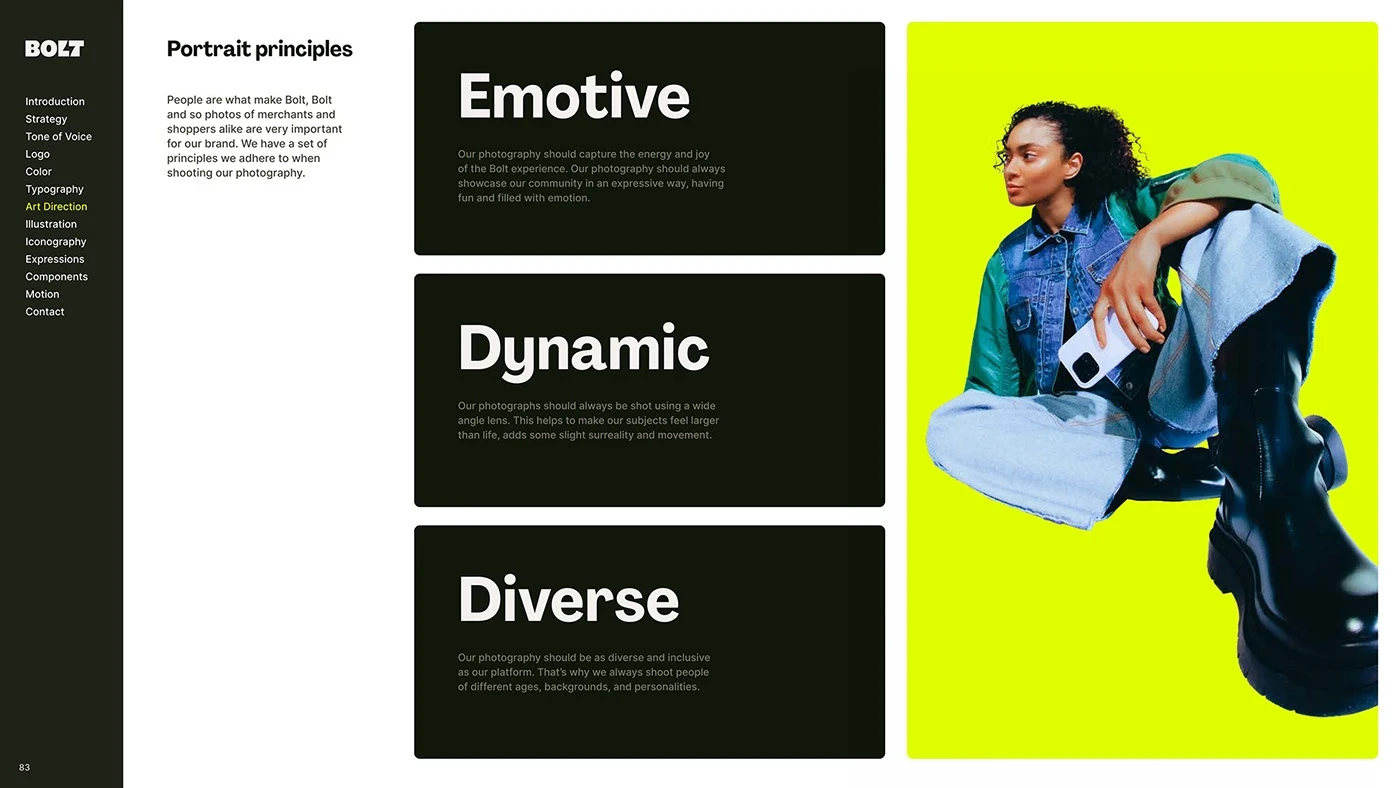
Conversely, if your brand is positioned as 'approachable' and 'collaborative,' your sensory cues should favor softer shapes, organic color pairings, and human-centric photography. These are not merely subjective aesthetic choices; they are functional decisions designed to signal your market intent to the viewer within milliseconds. Before a prospect reads a single word on your landing page, they have already formed an opinion about your competence based on the visual rhythm of the site.
The Anatomy of Sensory Perception
How do we translate abstract strategic pillars into concrete design choices? It requires a transition from 'branding as decoration' to 'branding as architecture.'
Consider an example: A financial advisory firm positioning itself as 'The Guardian of Generational Wealth.' The sensory cues must be rooted in stability and endurance. In this case, the design strategy would prioritize deep, muted color palettes that suggest maturity, serif typography that references tradition and trust, and layouts that emphasize generous, grounded margins. If this same firm adopted neon colors or erratic, bouncy animations, the design would fight the positioning, creating a cognitive dissonance that repels the exact client they are trying to attract.
The Sensory Design Framework
Use this framework to audit whether your visual assets actually align with your brand positioning goals. Go through each touchpoint—from your website to your printed invoices—and evaluate them against these four pillars:
Weight and Density: Does your typography feel heavy and grounded, or light and airy? Does this match the level of seriousness in your service? A law firm likely needs more visual 'weight' than a creative hobby shop.
Velocity and Motion: Do your digital transitions happen with a snap (suggesting agility and technical prowess) or a gradual, weighted fade (suggesting stability and slow-burn value)?
Tactile Quality: If you produce physical materials, does the substrate—the paper, the finish, the weight—convey the quality level of your offer? A premium price point requires a physical presence that justifies the cost.
Rhythm and Pacing: Does your layout utilize white space to breathe, or is it dense and packed with information? Dense layouts suggest efficiency and volume, which is excellent for retail or news outlets; generous white space suggests quality, exclusivity, and luxury.
Managing Consistency as a Strategic Asset
Consistency is often misunderstood as simply using the same logo everywhere. That is a baseline expectation, not a strategy. True consistency is about maintaining the same emotional frequency across every channel. When a customer moves from your website to an email, or from a social post to an invoice, the sensory experience should feel like it comes from the same source, carrying the same weight and tone.
If the 'mood' of your brand changes depending on the platform, you erode your own positioning. A brand that is erratic in its visual delivery is perceived as a brand that is uncertain of its mission. By strictly governing your design assets, you ensure that every interaction is a reinforcing experience, compounding your brand value over time. Each consistent touchpoint serves as a micro-confirmation of your strategic claims.
Moving Beyond Surface Aesthetics
There is a common mistake among founders to view design as a 'final polish'—something applied once the heavy lifting of the business model is done. This view is fundamentally flawed. Design is not the wrapper; it is the product.
When you invest in a sensory design strategy, you are essentially defining the boundaries of your brand’s personality. You are deciding what the brand is not. A brand that tries to appeal to everyone through a generic, 'safe' visual style ends up appealing to no one. By leaning into a specific sensory language that supports your positioning, you create a natural filter that attracts your ideal clients while signaling to others that you may not be the right fit. This is the hallmark of a healthy, mature brand.
Conclusion: Design is the Strategy
Brand positioning is only as effective as its execution. You cannot separate the business strategy from the sensory experience you deliver to your audience. By aligning your typography, layout, motion, and tactile assets with your core market narrative, you create a seamless identity that functions as a silent, persuasive force. Stop treating design as a final polish and start viewing it as the primary medium through which your positioning earns its place in the market. When the sensory experience matches the strategic intent, you stop having to explain why you are different—your customers will simply feel it.
Need a thoughtful brand identity? Get in touch with Shabeeb Maloof.

